
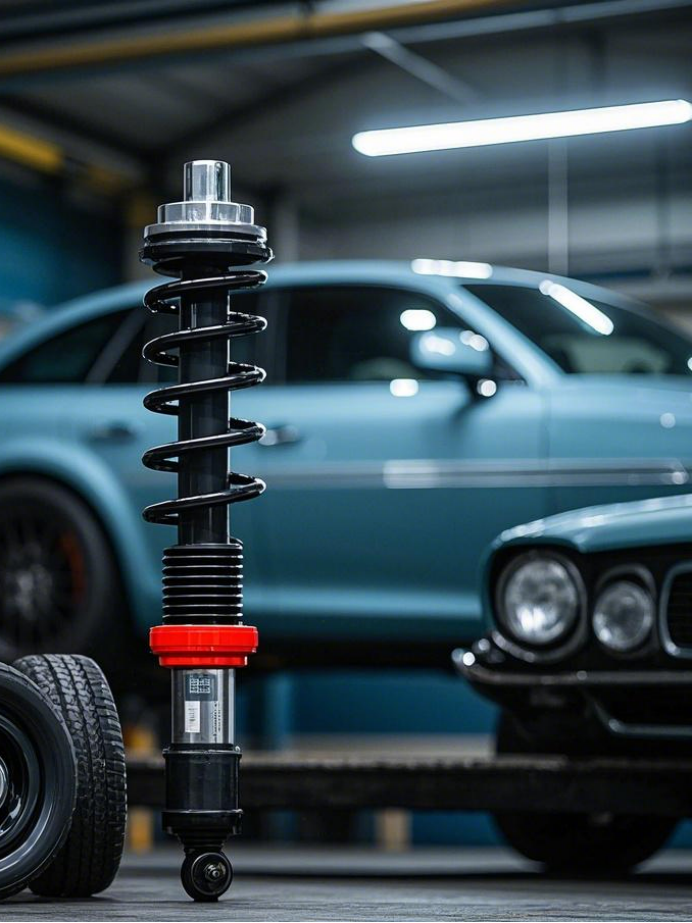
Shock absorbers are a key component of the car suspension system, playing a crucial role in cushioning road bumps, enhancing driving comfort and safety. Therefore, when shock absorbers experience oil leakage issues, it not only affects the damping effect of the vehicle but may also lead to a series of safety hazards.
So, what are the possible reasons that may cause oil leakage in car shock absorbers?
1.Aging of sealing components
The oil seal (usually made of rubber) is a critical component to prevent internal oil leakage of shock absorbers. However, after long-term use, the rubber may harden, crack due to high temperatures, oxidation, or repeated friction, making it unable to seal effectively, leading to oil leakage.
2.Damage to the piston rod
If the surface of the piston rod is scratched by foreign objects (such as flying stones) or bent due to impact, during subsequent movement, the piston rod will act like a “saw,” scratching the inner wall of the oil seal. In addition, in humid environments or when the vehicle’s rust-proof coating peels off, the piston rod is prone to rust, increasing surface roughness, creating a “sandpaper effect” between the piston rod and the oil seal, exacerbating the wear of the oil seal.
3.Harsh working environment for shock absorbers
The road conditions during car driving have a significant impact on shock absorbers. If the vehicle frequently travels on bumpy and pothole-filled roads, the shock absorbers need to constantly withstand high-intensity impacts and vibrations. This continuous action will increase the internal pressure of the shock absorbers, accelerating the wear of oil seals and other components. Additionally, driving for long periods in harsh environments such as high temperatures, humidity, and dust can also affect the sealing performance of shock absorbers, accelerate the aging and corrosion of components, leading to oil leakage.
4.Issues with oil quality or aging
The use of non-standard hydraulic oil or oil with mismatched viscosity may corrode seals or fail to provide effective lubrication, leading to accelerated wear. Moreover, not changing the oil for an extended period may cause a decrease in lubrication, resulting in friction and heat generation in internal metal components, further compromising the sealing.
5.Quality issues with shock absorbers
Some inferior shock absorbers use poor-quality materials, such as oil seal materials that are not wear-resistant, or cylinder materials with insufficient strength, which can lead to problems after a period of use, causing oil leakage. Alternatively, during the production process, if the manufacturing process is not up to standard, such as inadequate sealing interfaces or surface coating roughness not meeting specifications, the shock absorbers may experience oil leakage during use.
In summary, there is not a single cause of the oil leakage problem in car shock absorbers. Whether it is due to aging seals, damaged piston rods, adverse working environments, oil issues, or quality problems with shock absorbers themselves, car owners need to pay sufficient attention to these issues.
Regular inspection and maintenance of shock absorbers, using appropriate oil, maintaining good driving habits, and selecting high-quality shock absorber products are all effective measures to prevent shock absorber oil leakage. Only in this way can we ensure that the car shock absorbers work properly, making our travels safe and comfortable.