
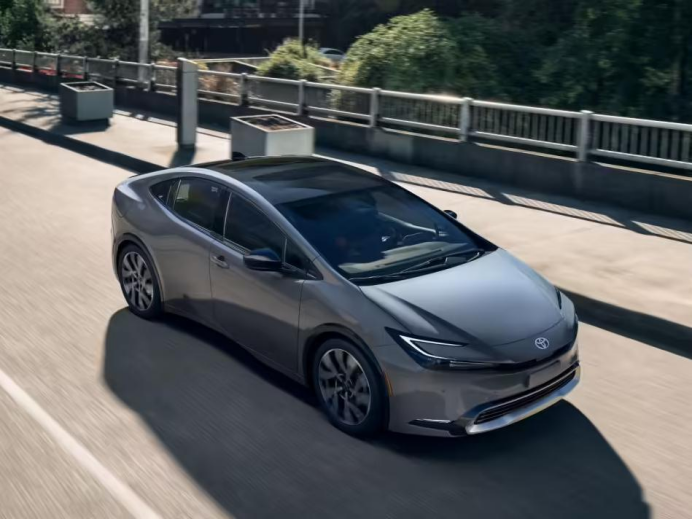
On February 4, 2026, according to Nikkei Asia, Toyota is intensifying its strategic investment in hybrid models, planning to increase its global production by about 30% by 2028. At the same time, Toyota will expand its manufacturing scale in the United States to consolidate its leading position in the hybrid market and respond to the structural adjustments in the global automotive market.
Supply chain sources indicate that Toyota’s global production target for hybrid models in 2028 is 6.7 million units, significantly higher than the total hybrid and plug-in hybrid production of 5 million units in 2026. During the same period, Toyota’s overall vehicle production is expected to grow by only 10% to 11.3 million units, which means that hybrid models will account for about 60% of its product lineup by 2028, becoming the core driver of sales.
Hybrid vehicles combine the advantages of internal combustion engines, electric motors, and batteries, offering better fuel efficiency than traditional gasoline vehicles and do not rely on charging stations, avoiding the pain points of pure electric vehicles. Currently, with global subsidies for pure electric vehicles declining and high purchase costs, consumer demand for hybrid models is accelerating, which is the core reason for Toyota’s increased focus on the hybrid segment.
To support its production capacity goals, Toyota has clarified its investment plans, focusing primarily on the U.S. market. Over the next five years, Toyota will invest a total of 1.5 trillion yen in the United States, with an initial 140 billion yen allocated for upgrading five U.S. factories, focusing on localizing the production of core hybrid components.
These investments cover factories in West Virginia, Kentucky, and other locations, aiming to expand the production capacity of hybrid engines and transmissions, with some projects starting production in 2027. By the first three quarters of 2025, Toyota’s hybrid models had already captured over 51% of the U.S. market share, and localized production will further enhance its competitiveness.
Toyota holds a significant advantage in the hybrid field, commanding 58% of the global hybrid market share by the end of 2025, maintaining an absolute leading position. Industry organization GlobalData has raised its hybrid market forecast, expecting annual global sales of hybrid and plug-in hybrid vehicles to reach 29 million units by 2030.
It is worth mentioning that Toyota’s global sales are projected to reach 11.3 million units in 2025, with hybrid models accounting for 42%, which is a key support for its continued position as the global sales champion.
Toyota’s strategic shift reflects the global automotive industry’s development direction. As the pure electric market growth slows, several international automakers are adjusting their strategies to refocus on transitional power technologies such as hybrids.Ford is scaling back pure electric projects and shifting focus to hybrids; General Motors is restructuring its electric vehicle business and cooperating with Hyundai to develop hybrid models; Volkswagen is also introducing a full hybrid system for the first time, filling a gap in its own product lineup.